Ever found yourself scrolling through job listings, wondering how you could truly blend your passion for the planet with a solid, future-proof career?
I know I have. For a long time, “green building” sounded like a niche concept, almost too good to be true, but today, sustainable construction engineering isn’t just a buzzword – it’s where the real innovation, and frankly, the critical work, is happening.
From what I’ve personally witnessed in this industry, the demand for professionals who can build smarter, greener, and more resilient structures has absolutely exploded.
This isn’t just a fleeting trend; it’s being driven by everything from volatile energy prices and tightening environmental regulations to a profound global awakening about climate change.
It’s an exhilarating, rapidly evolving field, but also one where the sheer variety of roles can feel a bit overwhelming at first glance. You might be pondering the nuanced differences between, say, an Environmental Systems Engineer and a Green Building Certification Specialist, or what it genuinely entails to be a Sustainable Project Manager in today’s market.
Understanding these distinctions is absolutely crucial for mapping out your professional journey. Let’s explore it in detail below.
Unearthing the Core Pillars of Sustainable Construction Careers
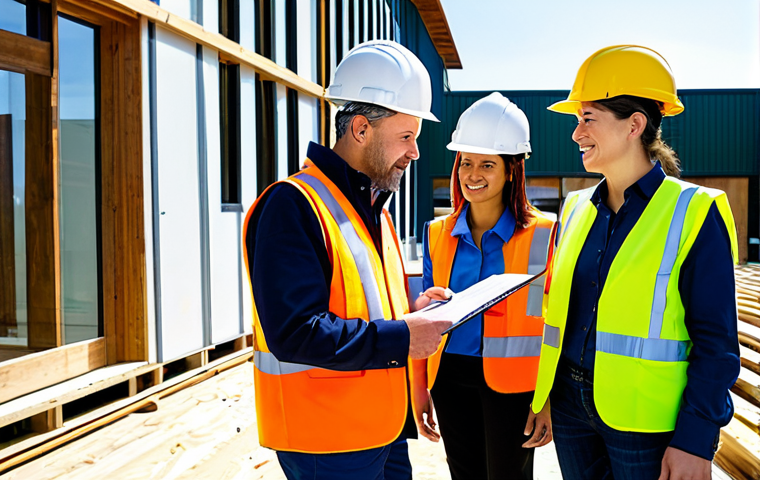
The landscape of sustainable construction engineering isn’t just a collection of jobs; it’s a vibrant ecosystem of specialized roles, each playing a crucial part in shaping a greener future.
When I first dove into this field, I felt a bit overwhelmed by the sheer breadth of possibilities, but what quickly became clear was that every single role, from the drawing board to the construction site, contributes to the grand vision of building responsibly.
It’s truly exhilarating to see how these diverse specializations intertwine to create genuinely impactful results. Understanding these foundational areas is absolutely key to navigating your own path.
The Visionaries: Sustainable Design and Architecture
At the very beginning of any project, you find the designers and architects. These aren’t just people sketching pretty buildings; they’re the ones embedding sustainability right into the DNA of the structure.
I’ve seen firsthand how a brilliant sustainable design can reduce a building’s energy footprint by an astounding amount, often by integrating passive heating and cooling, natural light, and innovative material choices.
It’s an intellectual challenge that demands both creativity and a deep understanding of environmental science.
- Integrating Bioclimatic Principles: This involves analyzing local climate data to design buildings that naturally regulate temperature and airflow, minimizing the need for artificial systems. It’s about letting the building breathe.
- Material Selection and Lifecycle Analysis: Far beyond just “recycled,” this involves assessing the entire environmental impact of materials, from extraction to disposal, opting for low-embodied energy options and local sourcing whenever possible. It’s about making truly informed choices.
- Water Conservation Strategies: Designing systems for rainwater harvesting, greywater recycling, and efficient fixture selection isn’t just good practice; it’s essential in regions facing water scarcity. You’re effectively building a self-sufficient ecosystem.
The Problem Solvers: Environmental Systems Engineering
If designers lay out the vision, environmental systems engineers bring it to life through complex, integrated systems. These are the folks who really get into the nitty-gritty of a building’s performance, ensuring everything from HVAC to water management is optimized for efficiency and minimal environmental impact.
I’ve always admired their ability to troubleshoot and innovate, often facing incredibly complex challenges that demand a deep technical mastery. They’re the silent heroes making sure the green promises of a design actually work in the real world.
- Advanced HVAC and Energy Management: Designing and implementing highly efficient heating, ventilation, and air conditioning systems that drastically cut energy consumption, often incorporating geothermal or solar thermal technologies. This is where significant operational savings happen.
- Smart Building Technologies and Automation: Developing and integrating intelligent systems that monitor and control energy usage, lighting, and even occupancy, allowing buildings to adapt in real-time to optimize performance. It’s like giving the building a brain.
- Waste Management and Circular Economy Integration: Engineering systems for onsite waste sorting, composting, and even exploring closed-loop systems where waste from one process becomes a resource for another within the building or complex. It’s about seeing waste as a misplaced resource.
Navigating Diverse Specializations: Beyond the Blueprint
The field of sustainable construction engineering is far more expansive than just design and systems. As I explored different career paths, I realized the incredible diversity of expertise required to truly deliver on green building promises.
It’s not just about what you build, but how you manage the process, how you ensure compliance, and how you communicate the value.
The Orchestrators: Sustainable Project Management
This is where the rubber meets the road. Sustainable project managers are the conductors of the entire green building symphony. They’re responsible for keeping projects on track, within budget, and, crucially, ensuring that all sustainability goals are met from conception to completion.
I’ve found that these roles demand an incredible blend of technical knowledge, leadership, and unwavering commitment to environmental principles, often requiring delicate negotiations with various stakeholders to maintain the project’s green integrity.
They face unique challenges, balancing ambitious sustainability targets with real-world budget and schedule pressures, but the payoff of seeing a truly green project come to life under their guidance is immense.
The Certifiers: Green Building Certification Specialists
These professionals are the arbiters of green legitimacy. They possess an in-depth understanding of various green building rating systems like LEED, BREEAM, or Living Building Challenge, and they guide projects through the rigorous certification process.
I remember working on a project where the certification specialist was absolutely instrumental in identifying overlooked opportunities for earning more credits, not just box-ticking, but truly enhancing the building’s performance.
Their expertise is vital for ensuring that a building genuinely meets established environmental performance standards and can demonstrate its green credentials to the world.
They act as vital navigators through complex regulatory landscapes, ensuring every sustainable claim is verifiable.
The Innovators: Research and Development in Green Materials
Behind every new green building material or technology is a team of researchers and developers pushing the boundaries of what’s possible. These roles often involve laboratory work, material science, and pilot project implementation, exploring everything from self-healing concrete to bio-based insulation.
It’s a fascinating area where science meets practical application, constantly redefining the toolkit available to sustainable constructors. I’ve seen some truly groundbreaking advancements emerge from this sector, proving that innovation is a never-ending journey in this field.
Essential Skills for Sustainable Engineering Success
No matter which specific path you choose within sustainable construction engineering, there’s a common set of skills that I’ve personally found to be absolutely indispensable.
These aren’t just technical proficiencies; they’re also about mindset and approach.
Holistic Problem-Solving and Systems Thinking
Sustainable construction isn’t about isolated solutions; it’s about understanding how every component of a building interacts with each other and with its environment.
You need to be able to see the bigger picture, anticipating unintended consequences and finding integrated solutions. I’ve often seen projects falter when teams focused too narrowly on one aspect without considering its impact on the whole.
It’s about connecting the dots, from energy flows to occupant well-being.
Strong Communication and Collaboration
You’ll be working with a diverse range of professionals – architects, contractors, clients, policymakers, and often the public. Being able to clearly articulate complex technical concepts in an accessible way, and to effectively mediate different viewpoints, is paramount.
I can’t stress enough how crucial collaborative spirit is; no single person builds a green building, it’s always a team effort. This means active listening, clear concise explanations, and sometimes, gentle persuasion.
Continuous Learning and Adaptability
The field of sustainable construction is evolving at an incredible pace. New technologies, materials, and regulations are constantly emerging. To stay relevant and effective, you need a genuine passion for continuous learning and the flexibility to adapt to new methodologies.
I’ve always found that the most successful professionals in this area are those who embrace change and actively seek out new knowledge, rather than resting on outdated practices.
It’s a field that constantly challenges you to grow.
The Day-to-Day Realities of Eco-Conscious Construction
What does a typical day look like for a sustainable construction engineer? Well, there’s rarely a “typical” day, which is something I personally love about this career.
It’s dynamic, challenging, and often requires a blend of desk work, site visits, and collaborative meetings.
Project Management and Oversight
For many roles, a significant portion of your time will be spent on project management tasks. This could involve reviewing design documents for green compliance, managing budgets for sustainable materials, coordinating with sub-contractors on green building practices, or tracking project milestones related to energy efficiency and waste reduction.
I’ve spent countless hours meticulously poring over specifications, ensuring that the initial green vision isn’t diluted during execution. It’s about diligent oversight and proactive problem-solving to keep everything aligned with the project’s sustainability goals.
Site Visits and Performance Monitoring
You can’t build green from behind a desk! Regular site visits are crucial to ensure that sustainable practices are being implemented correctly on the ground.
This might involve inspecting insulation installation, verifying proper waste segregation, or checking the functionality of renewable energy systems. Post-occupancy, many professionals are involved in monitoring a building’s actual performance, collecting data on energy and water consumption, and making recommendations for optimization.
I’ve personally found immense satisfaction in seeing real-time data validate the sustainable choices we made during design. It’s truly rewarding to witness a building perform as intended, or even better.
| Role Category | Primary Responsibilities | Key Skills & Tools | Impact on Sustainability |
|---|---|---|---|
| Sustainable Design Architect | Conceptualizing and drafting green building designs; material specification. | BIM Software, Lifecycle Assessment, Renewable Energy Integration. | Sets the initial environmental footprint and aesthetic of the project. |
| Environmental Systems Engineer | Designing and optimizing HVAC, water, and energy systems; performance modeling. | Energy Modeling Software, Fluid Dynamics, Smart Building Tech. | Ensures operational efficiency and resource conservation. |
| Sustainable Project Manager | Overseeing project lifecycle; budget and schedule management; stakeholder coordination. | Project Management Software, Risk Assessment, Negotiation. | Drives successful implementation of green initiatives; ensures adherence to goals. |
| Green Building Certification Specialist | Guiding projects through certification processes (e.g., LEED, BREEAM); documentation. | Knowledge of Rating Systems, Regulatory Compliance, Auditing. | Verifies and validates environmental performance; provides market credibility. |
Certification and Credentialing: Your Green Passport
In a field as specialized and rapidly evolving as sustainable construction, demonstrating your expertise through certifications isn’t just an advantage; it’s practically a necessity.
These credentials act as your passport, signaling to employers and clients that you possess a verified level of knowledge and experience. I remember the effort I put into my own certifications, and it absolutely paid off in opening doors and establishing credibility.
Understanding Key Industry Certifications
There are several globally recognized certifications that can significantly boost your career prospects. These include:
- LEED (Leadership in Energy and Environmental Design) Accreditation: This is arguably the most widely recognized green building rating system in the world, developed by the U.S. Green Building Council (USGBC). Achieving LEED AP (Accredited Professional) status demonstrates expertise in specific areas like Building Design + Construction (BD+C) or Operations + Maintenance (O+M). I’ve found that having a LEED AP credential immediately signals a serious commitment to sustainable practices and a foundational understanding of green building principles that employers highly value.
- BREEAM (Building Research Establishment Environmental Assessment Method): Originating in the UK, BREEAM is another globally influential standard, often favored in Europe and beyond. Its assessment criteria are comprehensive, covering everything from energy and water to health and well-being. Gaining a BREEAM Assessor or Consultant qualification can open up specific international markets.
- WELL Building Standard: While more focused on human health and well-being within buildings, the WELL standard is rapidly gaining traction as a complementary certification to traditional green building ratings. Professionals with WELL AP status are equipped to design and manage spaces that prioritize occupant health, a growing concern in the modern built environment.
- Passive House Certification: For those interested in ultra-low energy buildings, Passive House is a rigorous standard with a strong emphasis on airtightness, insulation, and heat recovery. Becoming a Certified Passive House Designer or Consultant requires a deep dive into building physics and high-performance design, and it’s a niche but highly respected credential.
The Value of Continuous Professional Development
Beyond initial certifications, the world of sustainable construction demands ongoing learning. Webinars, industry conferences, and advanced courses are not just good for your resume; they’re essential for staying current with new regulations, technological advancements, and best practices.
I’ve personally found that attending industry events provides invaluable networking opportunities and keeps my finger on the pulse of emerging trends, allowing me to bring cutting-edge knowledge to every project.
It’s a career where complacency simply isn’t an option.
Innovation and the Future Landscape of Green Building
Looking ahead, the trajectory of sustainable construction engineering is nothing short of exhilarating. We’re not just refining existing methods; we’re witnessing entirely new paradigms emerge, driven by technological leaps and an increasing global imperative to build sustainably.
It’s a future I’m incredibly excited to be a part of, as it promises to transform our built environment in profoundly positive ways.
Embracing Digital Transformation: AI and IoT in Construction
The integration of Artificial Intelligence (AI) and the Internet of Things (IoT) is poised to revolutionize how we design, build, and operate green structures.
Imagine AI optimizing a building’s energy usage in real-time based on weather patterns and occupancy, or IoT sensors detecting inefficiencies before they become major problems.
I’ve seen pilot projects where drones equipped with thermal imaging can identify insulation gaps with incredible precision, or where predictive analytics reduce construction waste by optimizing material ordering.
These aren’t just futuristic concepts; they are rapidly becoming tangible tools that enhance efficiency and sustainability.
The Rise of Regenerative Design and Circular Economy Principles
Beyond simply reducing negative impacts, the future lies in regenerative design – creating buildings that actively improve the environment around them, perhaps by purifying air or producing more energy than they consume.
Closely linked is the circular economy, where buildings are designed for deconstruction rather than demolition, with materials endlessly reused and recycled.
This represents a fundamental shift from a linear “take-make-dispose” model to one where waste is eliminated and resources are continually circulated.
It’s an ambitious vision, but one that promises truly transformative environmental benefits and a completely different way of thinking about building lifecycles.
Resilience and Climate Adaptation in Design
As climate change impacts become more apparent, the focus on building resilient structures that can withstand extreme weather events and changing environmental conditions is paramount.
This means designing for flood resistance, heat mitigation, and adaptable urban infrastructure. Sustainable construction engineers are increasingly on the front lines of climate adaptation, ensuring that our built environment can not only lessen its impact on the planet but also cope with the planet’s evolving conditions.
It’s a challenging but deeply meaningful aspect of the work, knowing you’re contributing to a safer, more robust future for communities.
Personal Growth and Impact in a Green Career
Choosing a career in sustainable construction engineering isn’t just about finding a job; it’s about embarking on a journey where your daily work genuinely contributes to a larger, more significant cause.
This personal satisfaction, for me, has been one of the most rewarding aspects of my journey.
A Sense of Purpose and Meaningful Contribution
There’s an undeniable sense of purpose that comes with knowing your work is directly addressing some of the most pressing global challenges – climate change, resource depletion, and environmental degradation.
I’ve often felt a deep connection to the projects I work on, understanding that each decision, no matter how small, moves us closer to a more sustainable world.
It’s incredibly empowering to see the tangible results of your efforts in the form of energy-efficient buildings, healthier indoor environments, and reduced carbon footprints.
This intrinsic motivation is a powerful driver.
Continuous Learning and Intellectual Stimulation
As I mentioned earlier, this field is constantly evolving, meaning there’s always something new to learn, a new challenge to tackle, or a novel solution to explore.
This continuous intellectual stimulation keeps the work fresh and engaging. I’ve found myself constantly researching, collaborating, and problem-solving in ways that truly stretch my capabilities and expand my knowledge base.
If you thrive on learning and innovation, this career path offers an endless supply of opportunities to grow and adapt.
Being Part of a Passionate Community
The sustainable construction community is, in my experience, one of the most passionate and dedicated groups of professionals you’ll ever encounter. There’s a strong sense of shared mission and a collective desire to make a difference.
Networking with peers, attending conferences, and collaborating on projects often feels less like work and more like joining forces with like-minded individuals.
This sense of belonging and collective effort makes the challenging moments more manageable and the successes all the more rewarding. It’s a supportive environment where innovation and collaboration truly flourish, fueled by a common goal that transcends individual projects.
As I reflect on my own journey in sustainable construction engineering, I’m continually struck by the profound impact one can make in this field. It’s a career path that truly marries technical expertise with a deeply held purpose, allowing you to contribute directly to a healthier planet and more resilient communities. If you’re looking for work that’s not only intellectually stimulating but also profoundly meaningful, I wholeheartedly encourage you to explore the vast opportunities within this green landscape. It’s a journey of continuous learning, impactful contribution, and immense personal satisfaction.
Useful Insights
1. Networking is Key: Building connections within industry associations (like the USGBC or local green building councils) can open doors to mentorship, job opportunities, and collaborative projects. I’ve found invaluable insights from simply talking to experienced professionals.
2. Soft Skills Matter: While technical prowess is essential, don’t underestimate the power of strong communication, negotiation, and teamwork. Green projects often involve complex stakeholder coordination, and your ability to build consensus is paramount.
3. Gain Hands-On Experience: Internships, volunteer work on eco-friendly projects, or even personal DIY sustainable building efforts can provide invaluable practical insights that differentiate you from others. There’s nothing quite like seeing the theories applied in real-world scenarios.
4. Embrace Policy & Regulation: Understanding local and national green building codes, incentives, and environmental regulations isn’t just about compliance; it’s about leveraging policy to drive more sustainable outcomes for your projects. These frameworks are constantly evolving.
5. Specialize, But Stay Broad: While developing expertise in a specific area (like energy modeling or material science) is beneficial, maintaining a broad understanding of the entire sustainable construction ecosystem will make you a more versatile and valuable asset. The interdependencies are immense.
Key Takeaways
Sustainable construction engineering offers a diverse and impactful career path, ranging from visionary design and intricate systems engineering to crucial project management and certification roles. Success in this field hinges on holistic problem-solving, strong collaboration, and a commitment to continuous learning and adaptation. Key certifications like LEED and BREEAM are vital for credibility, while the future promises exciting innovations with AI, regenerative design, and climate resilience. Ultimately, it’s a deeply rewarding career for those passionate about building a greener, more sustainable future.
Frequently Asked Questions (FAQ) 📖
Q: Given the sheer variety of roles you mentioned, from Environmental Systems Engineers to Sustainable Project Managers, how does someone truly figure out their best fit or entry point into this rapidly evolving field without getting completely overwhelmed?
A: Oh, I totally get that feeling! When I first started digging into sustainable construction, I felt like I was drowning in acronyms and job titles, wondering if I even had the right background.
What I’ve learned, and what I’d genuinely recommend, is to stop trying to map out your entire career on day one. Instead, focus on what problem excites you most.
Do you geek out on data and optimizing energy flows? Maybe environmental systems or building performance analysis is your lane. Are you a natural leader who loves seeing a complex project through from concept to completion, managing people and priorities?
Then sustainable project management might be your calling. My own journey taught me the immense value of informational interviews – reaching out to folks on LinkedIn, asking them about their actual day-to-day, what they love, and what drives them crazy.
You’d be surprised how willing people are to share their insights over a quick coffee. Also, don’t underestimate internships or even volunteer gigs with organizations focused on green initiatives.
Getting that hands-on exposure, even for a short stint, can provide clarity that no amount of online research ever will. It’s about finding where your passion, skills, and the industry’s needs beautifully intersect.
Q: Beyond the obvious environmental benefits, what are the most compelling, immediate, and tangible drivers making sustainable construction engineering such a critically important and high-demand career right now?
A: You’re right to ask about the “why now,” because it’s so much more than just a feel-good, save-the-planet initiative these days. From my vantage point, having seen projects both flourish and falter, the demand is absolutely exploding because of cold, hard economics and regulatory muscle.
Think about it: energy prices are volatile; a building that uses 30% less energy isn’t just good for the environment, it’s a huge operational cost saving that goes straight to the bottom line.
I’ve personally witnessed developers securing more favorable financing or even tax incentives for achieving certain green certifications. Then there’s the regulatory push – cities and states are increasingly mandating stricter building codes and performance targets, which means if you can’t build green, you might not be able to build at all.
And let’s not forget the “climate change” awakening you mentioned; it’s not just governments but corporations and investors demanding buildings that are resilient to extreme weather and contribute to a lower carbon footprint.
This isn’t some fleeting trend; it’s a fundamental shift driven by global economics, risk mitigation, and a profound understanding that we simply must build smarter to survive and thrive.
It’s where the smart money and smart careers are heading.
Q: For someone who might still see “green building” as a bit abstract or perhaps overly idealistic, what’s one crucial “boots-on-the-ground” reality about the field you wish more people understood?
A: That’s a fantastic question, and it cuts right to the heart of a common misconception. If someone still thinks “green building” is just about putting a few solar panels on a roof or using recycled plastic, they’re missing the forest for a few trees.
The absolute truth, the “boots-on-the-ground” reality, is that sustainable construction engineering is incredibly rigorous, data-driven, and intensely collaborative.
It’s not about idealism; it’s about hard science, innovative materials, complex systems integration, and profound problem-solving on a massive scale. I remember being on a site where we were wrestling with how to precisely calibrate a geothermal heat pump system to work seamlessly with a high-performance envelope, all while balancing the budget and the construction schedule.
This wasn’t some airy-fairy, philosophical discussion; it was hardcore engineering, requiring deep expertise in HVAC, thermodynamics, structural integrity, and even computational fluid dynamics.
It takes a village of sharp minds – engineers, architects, project managers, tradespeople – all pushing the boundaries of what’s possible, not just because it’s “nice,” but because it’s the smartest, most efficient, and most profitable way to build for the long term.
It’s tangible, demanding, and incredibly rewarding work.
📚 References
Wikipedia Encyclopedia
구글 검색 결과
구글 검색 결과
구글 검색 결과
구글 검색 결과
구글 검색 결과